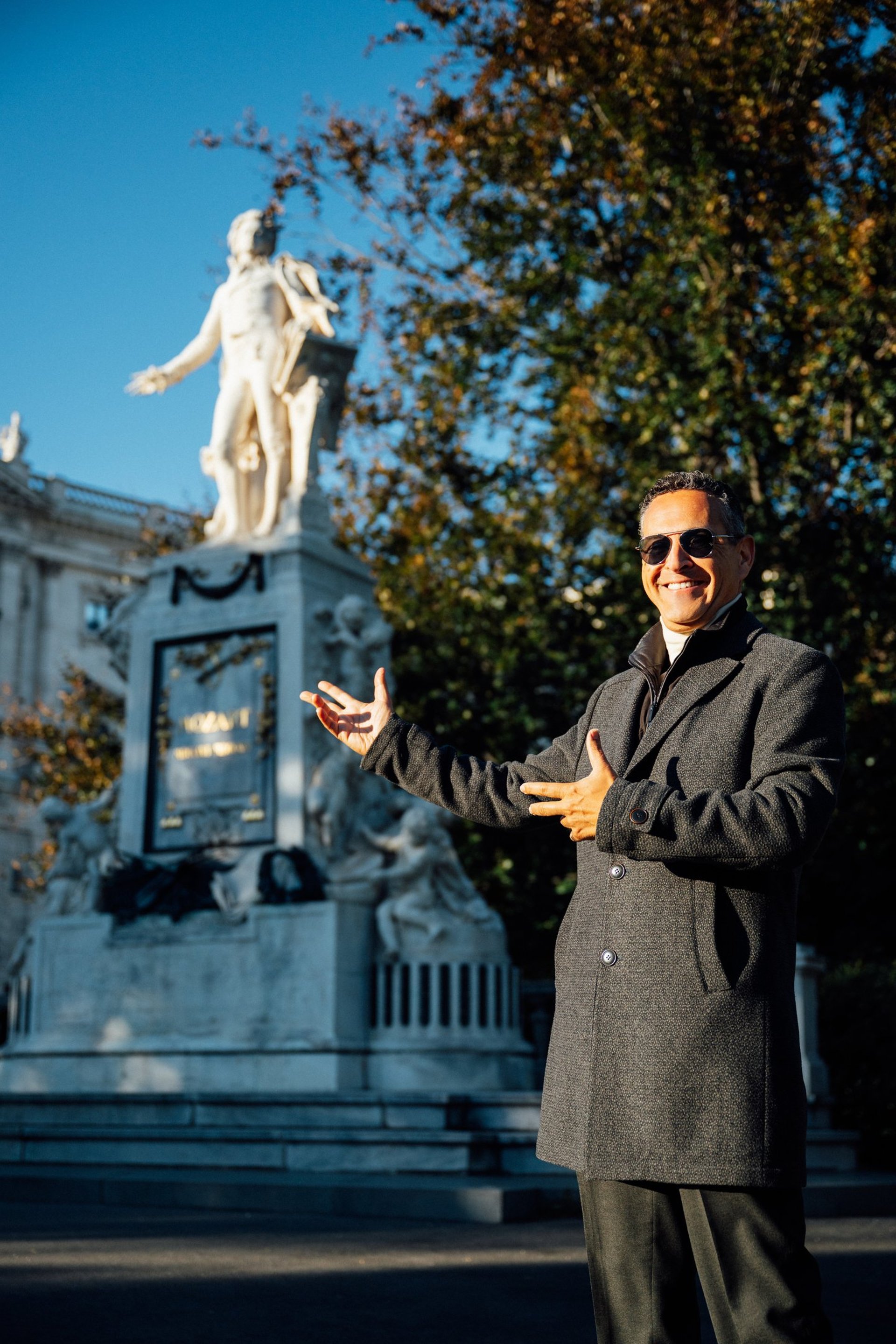
Gesamtkunstwerk
Developing a Special Orchestra Project or Mini-Festival Vision and Strategy
At the core of a successful special orchestral season or mini-festival lies a unifying artistic vision—an overarching theme or concept that threads through programming, staging, and audience experience. This vision should embody the principles of Gesamtkunstwerk, where music, visuals, narrative, and community engagement form a cohesive whole from conception to execution.
A compelling example was WWI: A Centenary Perspective, conceived around the centenary of the First World War. Recognizing the absence of major commemorative events in the Los Angeles area, Daniel Alfred Wachs developed a project centered around the Orange County Youth Symphony Orchestra’s (OCYSO) co-commission and U.S. premiere of Mark-Anthony Turnage’s Passchendaeles. Rather than presenting a single commemorative concert, the project became a multidimensional artistic and educational opportunity that explored fundamental questions surrounding war, remembrance, and resilience.
The selected repertoire created a clear narrative arc: Charles Ives’ The Unanswered Question posed the existential question “Why war?”, Turnage’s Passchendaeles served as an act of remembrance, and Carl Nielsen’s Symphony No. 4, The Inextinguishable, affirmed the indomitable human spirit and the aspiration of “Never Again.”
The project’s impact extended beyond the concert hall and brought together major Southern California cultural institutions through collaborations with the Young Musicians Foundation Debut Orchestra and the Los Angeles Philharmonic, which hosted the U.S. premiere at Walt Disney Concert Hall as part of its prestigious Sounds About Town series. Public engagement was further enhanced by a panel discussion at the Los Angeles Public Library featuring cultural and academic leaders including acclaimed poet, Professor of Poetry and Public Culture at University of Southern California (USC) and former chairman of the National Endowment of the Arts (NEA), Dana Gioia, WWI historian and Professor at Chapman University Dr. Jennifer Keene, and President and Artistic Director of the Philharmonic Society of Orange County John Mangum. while a concluding chamber concert at the Los Angeles County Museum of Art (LACMA) combined music from the WWI era with readings of wartime letters and was broadcast and live streamed on KUSC as a part of Sundays Live.
Through the integration of performance, education, historical reflection, and institutional partnerships, the project exemplified the concept of Gesamtkunstwerk in practice.
Wachs adheres to two basic principles when selecting repertoire:
That a successful program achieves a correct balance of content and time, recognizing that there is a difference between real and perceived time.
That the selection of repertoire aligns with the artistic vision and strategy and furthers the organization’s objectives.
Wachs approaches programming with careful consideration of the ensemble’s capabilities, selecting works that are both artistically challenging and pedagogically rewarding. His choices aim to provide short-term achievement while fostering long-term growth for both the musicians and the organization. As a guiding principle, within an academic and educational framework, repertoire is not repeated within a four-year cycle, ensuring continual development and exploration.
1. Thematic Foundation – “What?”
DAW begins by identifying a central theme or narrative that resonates across artistic and community dimensions. This might include:
A major cultural anniversary (composer’s birth or death, historical event, city milestone)
A societal theme (climate, migration, innovation, freedom)
An artistic exploration (mythology, transformation, journeys, utopias)
The theme should not only inspire programming but also provide opportunities for creative exploration across disciplines—from script-writing and visual design to educational and community extensions.
2. Relevance and Timeliness – “Why Now?”
The chosen theme should ideally connect to something timely and meaningful, either within the organization, the broader community, or the world at large. This could align with:
Civic commemorations or city-wide festivals
Institutional anniversaries or milestones
National or global conversations that resonate locally
The centenary of World War I provided such a framework for WWI: A Centenary Perspective, transforming a historical anniversary into an educational and artistic opportunity for both musicians and audiences.
This relevance helps strengthen community buy-in, attract diverse partners, and open up funding or sponsorship avenues.
3. Artistic Integrity First – “Why This Repertoire?”
Repertoire should be selected first and foremost based on artistic merit and alignment with the creative vision—not by trend, convenience, or expectation. Curating repertoire under this principle:
Ensures a rich and authentic experience
Enables programming of both known and lesser-known works
Allows for cross-genre or interdisciplinary inclusion where relevant
In WWI: A Centenary Perspective, the repertoire was curated around the co-commission and premiere of Mark-Anthony Turnage’s Passchendaeles to serve a narrative and philosophical purpose rather than merely commemorate an anniversary. The combination of Ives, Turnage, and Nielsen created a musical journey from questioning to remembrance to hope.
4. Collaboration and Reach – “Where and With Whom?”
Whenever possible, DAW leverages strategic partnerships—with other arts organizations, community groups, educational institutions, or non-traditional venues—to:
Expand the reach and impact of the project
Stretch budgets and resources through shared production or promotion
Foster cross-pollination of audiences, especially younger and more diverse segments
WWI: A Centenary Perspective demonstrated this principle through collaborations with the Young Musicians Foundation Debut Orchestra, the Los Angeles Philharmonic, the Los Angeles Public Library, the Philharmonic Society of Orange County, Chapman University, the University of Southern California, the WWI Centennial Commission, G. Schirmer/AMP, and the Los Angeles County Museum of Art, allowing the project to extend beyond a single concert into a city-wide cultural initiative.
5. Appeal to Young Audiences – “How?”
To truly engage young audiences, the project should offer a complete package that includes:
Compelling narrative or thematic framing
Visual and experiential design (lighting, multimedia, immersive elements)
Scripted or hosted performances that contextualize the experience without diluting it
Accessible platforms (digital components and social media storytelling)
Educational discussions, live readings, and interdisciplinary presentations can deepen engagement and transform listening into a broader cultural experience. To this end, WWI: A Centenary Perspective included a panel discussion and a dramatic reading of letters written by soldiers from the battlefield interspersed between music of the era.
6. Implementation as a Gesamtkunstwerk
From planning to performance, the season or festival should be realized as a fully integrated artistic product, with:
Clear narrative or thematic throughlines
Strong visual identity across print, digital, and stage
Consistent tone and messaging in audience communications
Opportunities for interaction, discovery, and engagement beyond the concert hall
When conceived holistically, a special project becomes more than a sequence of concerts. It becomes a cultural experience in which performance, education, visual presentation, partnerships, and audience engagement work together as a unified whole—a modern realization of the Gesamtkunstwerk ideal.
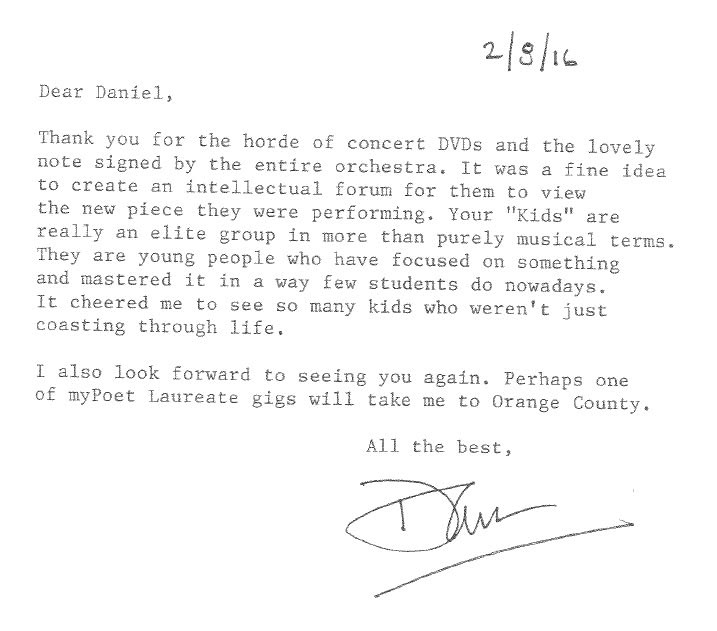
Prof. Dana Gioia , Poet Laureate of California & former Chairman of the National Endowment of the Arts
© 2023-2026 Daniel Alfred Wachs, All Rights Reserved.